June 11th, 2025

Kids can be picky eaters. How many times have you seen your child try to hide the peas under a mound of mashed potatoes?
At Hamilton and Whitecotton Orthodontics, Dr. Todd Hamilton and Dr. Bryan Whitecotton and our team understand how hard it can be to get your child to eat the recommended daily allowance of fruits and vegetables. The task of providing fun, nutritious meals becomes even more challenging if he or she wears braces. It's an age-old saying that breakfast is the most important meal of the day. These five braces-friendly recipes are not only nutritious, but they will have little Jimmy flashing his “tin grin” when he sits down at the kitchen table in the morning.
- Scrambled eggs are soft and easy to eat if you have braces. If you drown them in ketchup (which many kids love to do), eggs become even mushier. Minimal chewing is required, and that’s the key to a braces-friendly recipe.
- A healthy breakfast provides energy and jump-starts metabolism. A smoothie is not only a good source of fruit, but it’s also gentle on braces. More importantly, smoothies are fun to create. You can toss anything in the blender (bananas, mangoes, strawberries, spinach) and create a drink that’s loaded with vitamins and antioxidants.
- If you wear braces, eating crunchy cereals or granola for breakfast is out of the question: Bite down the wrong way and you might snap the wires or dislodge the brackets. However, you can get your grains and oats by substituting oatmeal for cereal. This mushy breakfast treat has a host of health benefits.
- Pancakes are not the healthiest breakfast choice. Still, this Sunday morning favorite is braces-friendly. The idea is to make it healthier by hiding blueberries in the pancake batter just like your child hides peas in the mashed potatoes.
- Toast with jam is ok, but skip slathering peanut butter on the bread. If you have braces, the general rule of thumb is to steer clear of foods that are hard or chewy. These types of foods can break wires. Of course, most kids will agree that toast isn’t the most exciting breakfast recipe. Make it a Pop-Tart instead!
For more braces-friendly recipes, please give us a call at our convenient Denver, NC office!
June 4th, 2025

The community health awareness group Oral Health America has reported that 82 percent of adults are unaware of the role that infectious bacteria can play in tooth decay or cavities, and almost three out of five children aged 12 to 19 have tooth decay. Since June is National Smile Month, Dr. Todd Hamilton and Dr. Bryan Whitecotton and our team at Hamilton and Whitecotton Orthodontics thought we’d remind our patients about the importance of good oral hygiene visits between office visits.
To keep your family’s smiles healthy and beautiful for years to come, be sure to:
- Brush at least twice a day with fluoride toothpaste
- Floss every day to clean between your teeth
- Eat a healthy, well-balanced diet
- Reduce your intake of sugary foods and drinks
- Visit Dr. Todd Hamilton and Dr. Bryan Whitecotton for scheduled appointments
If you want to know more about healthy home care habits, feel free to ask our team at your next appointment, or ask us on Facebook!
May 28th, 2025

At Hamilton and Whitecotton Orthodontics, there are a few things we want to remind you of when you're on vacation, so that a day with friends and family won’t be spent dealing with an orthodontic emergency. Firstly, we are here for you whether you are in town or out of town on vacation. Give us a call and we may be able to address the problem over the phone. Second, if we are unable to help you fix the problem over the phone, we will help you find an orthodontic practice in your vacation area that can help you.
If you experience problems reaching our office, we suggest going online and searching for orthodontic practices in your area. Most orthodontists will lend a helping hand to another orthodontic patient and get them out of pain or discomfort.
If you have braces, whether they are metal, ceramic, or lingual, Dr. Todd Hamilton and Dr. Bryan Whitecotton and our team suggest steering clear of the following foods to avoid broken brackets and/or wire distortion while you are on vacation:
- Chewy, sticky, or gummy food
- Apples, pears and other whole fruits (cut fruit into thin wedges before consuming)
- Bagels and hard rolls
- Bubble gum
- Corn on the cob
- Hard candies
- Hard cookies
- Pretzels
- All varieties of nuts, including peanuts, almonds, and cashews
Finally, if you have clear aligners and you lose your tray, don’t worry! Simply put in either the previous tray or the next tray and contact us as soon as you get home!
Follow these tips and you can have a worry-free vacation!
May 24th, 2025
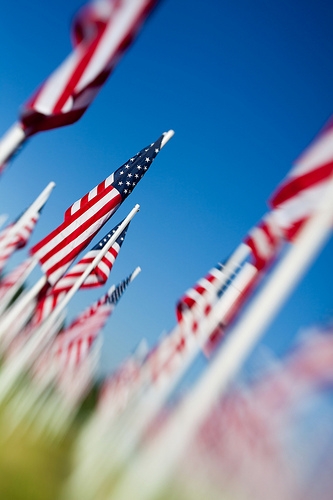
Memorial Day is not only a federal holiday in the United States, but it is a day of observance and remembrance of those who died in service. Originally known as Decoration Day, this solemn day has been marked on calendars since the end of the American Civil War as a day to commemorate both the Confederate and Union soldiers who fought and died in the war.
Marking the graves of fallen soldiers with flowers, wreaths, or other tokens has been practiced throughout history, but it wasn't until the mark of the end of the Civil War that a special day was decided upon as the one to spend in remembrance. By 1890, every state in the country was observing Decoration Day. It wasn't until 1967 when the name formally changed from Decoration Day to Memorial Day, in order to encompass all fallen American soldiers in all wars and conflicts. In June of 1968, Congress moved the official date of Memorial Day to the last Monday in May in order to create a three day weekend.
Today, while there is certainly an air of remembrance on Memorial Day, it has become more a day of spending time with family, friends, and other loved ones. This day is also heralded as the start of summer, with many schools finishing for the year around this time. Our team at Hamilton and Whitecotton Orthodontics remembers it as a day to take solace and remembered those lost.
Traditional observances of Memorial Day are still held, and they often involve raising the American Flag then lowering it to a half-staff position until noon, and then raising it once again to its full height afterwards. The flag is lowered to remember those who've lost their lives while in service to their country, and then it is raised to signify our willingness to not let their sacrifice be in vain.
From community parades in the Denver, NC area, backyard cook-outs, and fireworks to formal ceremonies, Memorial Day is commemorated in many different ways. No matter how you choose to spend this day, take a moment to remember those who've lost their lives in an effort to preserve our freedom.

