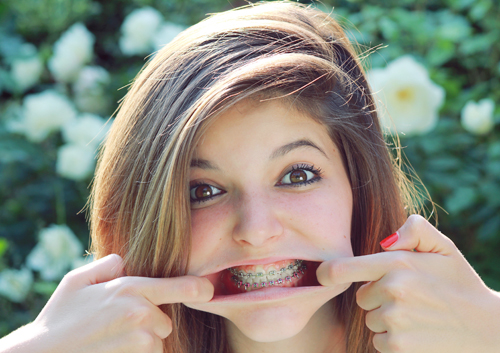
Winter and its snowball fights are behind us, true, but there might be another kind of snowball heading your way. When you neglect the small steps involved in your everyday orthodontic routines, little problems can start to snowball into bigger ones, affecting your dental health and delaying your orthodontic progress.
Here are three areas where letting the small steps in your routine slide can have consequences:
Dental Hygiene
It can be harder to get your teeth their cleanest while you’re wearing braces. After all, there are wires to get behind and brackets to brush around, and you still need to get that floss in between your teeth. But neglecting your dental hygiene can have big consequences:
The bacteria in plaque create acids that strip the minerals from tooth enamel. This process is called demineralization. Wherever plaque is allowed to build up, you’ll start to see white spots in the enamel. This discoloration is a sign that minerals are missing, and is often found around brackets, where it’s harder to brush. White spots can be treated cosmetically, but better to avoid them as much as possible, because eventually they can become . . .
As demineralization continues, the enamel becomes weaker and weaker, until a hole forms in the tooth—a cavity. Besides damaging your tooth, a cavity can put you behind your orthodontic schedule if you need parts of your braces removed for treatment.
When plaque builds up around the gums, gum tissue becomes inflamed and irritated—this is gingivitis, or early-stage gum disease. Symptoms often include puffy gums, redness, bleeding, and bad breath. Mild gum disease becomes more serious over time, so treat gingivitis early—or, even better, prevent gum disease with careful brushing and flossing.
Looking After Your Appliances
Orthodontic appliances need love, too! Any instructions you get for their care are for a good reason. Brackets can become loose when you bite down on chewy foods. Wires can break when you eat hard candy. Aligners can warp if you leave them on a hot dashboard. If you follow instructions carefully, you won’t need to postpone your progress while you wait for repairs.
If you wear aligners, or a removable appliance, or a retainer, don’t forget to protect these items when you’re not wearing them. This means placing them in their cases, not wrapped in a napkin on your lunch tray, or in the bottom of your gym bag, or anywhere your dog can reach them!
- Be Proactive If Accidents Happen
Unfortunately, accidents do happen, and loose brackets, broken wires, lost ligatures, and cracked or warped aligners can interrupt orthodontic progress and cause you pain and discomfort. Give our Denver, NC orthodontic office a call to see if minor damage to an appliance can be handled at home, or whether you should be seen before your next regular appointment for repairs.
Following Your Orthodontic Plan
There’s more to following your orthodontic schedule than arriving on time for appointments. Depending on your treatment, you might be responsible for keeping track of the time you spend wearing:
Elastic bands can be used to help align your upper and lower jaws. If you don’t wear your bands as directed, you won’t make progress as quickly as you could. And remember to replace your elastics as often as recommended, because after hours of s-t-r-e-t-c-h-i-n-g they lose their effectiveness.
Most aligners are worn for around 22 hours each day. If you don’t follow your orthodontist’s instructions and wear your aligners for the recommend hours each day, your teeth won’t be in the proper alignment when your next set of trays is ready to begin work.
If you have a retainer and don’t wear it, your teeth will start to shift position. Skip wearing your retainer long enough, and you might need a return to your braces or aligners to repair any new misalignment.
Don’t ignore what seem like little dental and orthodontic responsibilities. Keep up with daily cleaning and brushing, take care of your appliances, and follow your orthodontic plan, and you’ll finish your treatment with a beautiful and healthy smile—right on schedule.